
Phosphatidylserine Supplement: How to Choose by Label
By the Utoya Wellness team · · 6 min read
Quick answer
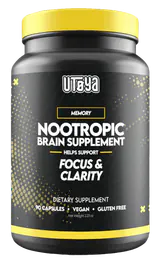
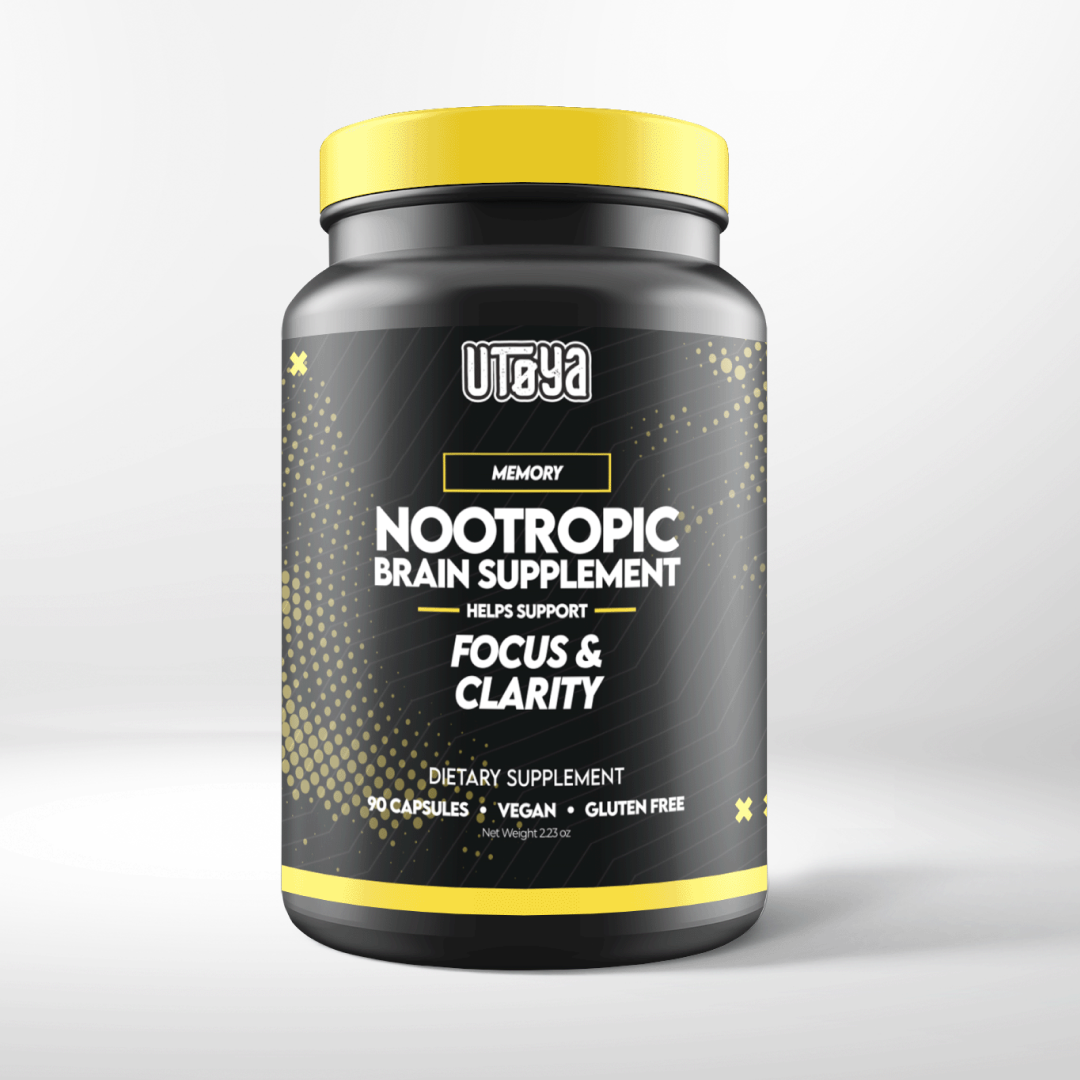
Phosphatidylserine is a phospholipid found in cell membranes, especially brain cells, and most supplement labels list 100 mg per serving, up to three times daily, or about 300 mg total per day. This page helps you choose by label, not hype. It also compares a standalone product with the phosphatidylserine in Utoya Wellness Nootropic, a caffeine-free two-capsule formula.
This page helps you choose by label, not hype. It also compares a standalone product with the phosphatidylserine in Utoya Wellness Nootropic, a caffeine-free two-capsule formula.
Phosphatidylserine in brief: what it is and what labels usually list
Phosphatidylserine is a phospholipid, a fat-like molecule that helps form cell membranes, and it is especially concentrated in brain cells.
The same ingredient shows up in two kinds of products: single-ingredient capsules and softgels, and combined formulas built for focus. Which one fits you depends on how much control you want over the amount and how many other ingredients you already take.
We make one of the combined formulas, so we lay out where a standalone product wins and where ours does.
Standalone phosphatidylserine vs. phosphatidylserine in Utoya Wellness Nootropic
A standalone product wins if you want to choose your own phosphatidylserine amount, and Utoya Wellness Nootropic wins if you want one caffeine-free morning routine with several focus-supporting ingredients.
| Criterion | Standalone phosphatidylserine | Utoya Wellness Nootropic |
|---|---|---|
| Phosphatidylserine amount per serving | Wins. | One of several ingredients in a two-capsule serving, so it is not built for choosing a specific amount. |
| Source and form | Varies by brand: soy, sunflower or cabbage; capsule, softgel or powder. Read each label. | Capsules. Check the label for the phosphatidylserine source if you have a soy allergy. |
| Third-party lab testing | Varies by brand. Look for a posted certificate of analysis. | Check the product page for lab documentation. |
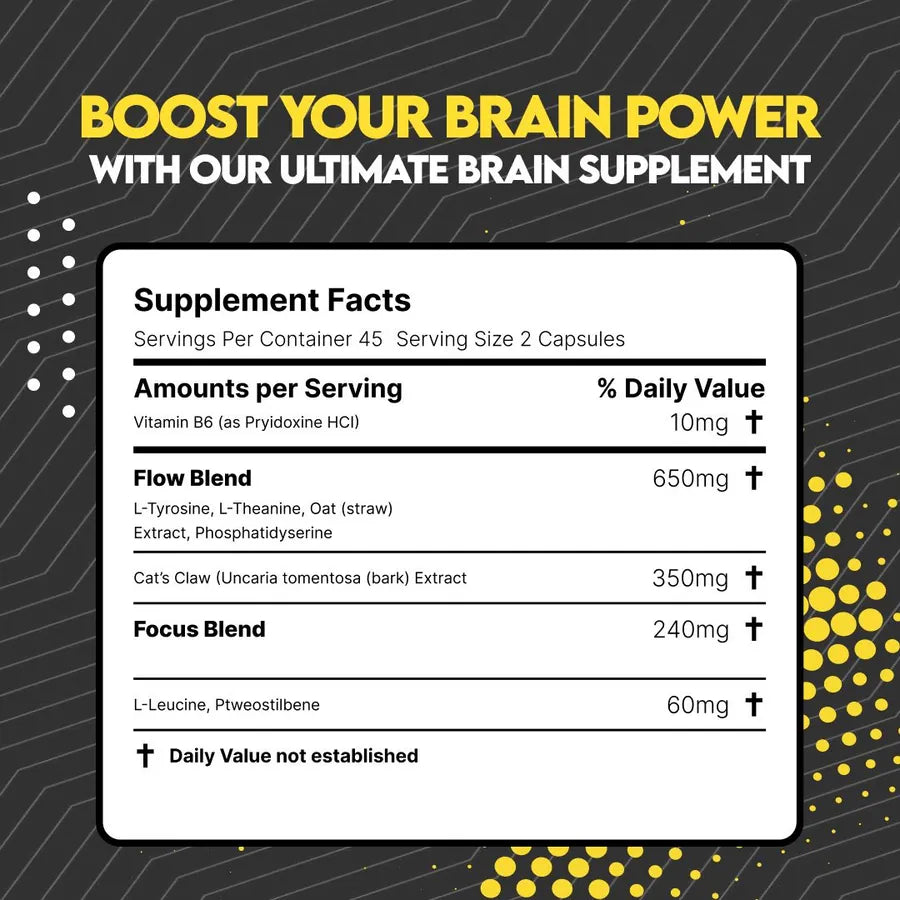
| Formula scope and caffeine | Wins on simplicity: one ingredient only. Caffeine is usually absent. | L-tyrosine, L-theanine, phosphatidylserine, cat's claw bark extract and vitamin B6, with no caffeine or other stimulants. |
| Convenience | One more product to add if you also want other ingredients. | Wins: two capsules with breakfast cover the whole routine. |
| Who it suits | People who want to control their amount or already take other ingredients. | People who want a combined, caffeine-free morning routine. Anyone on blood thinners or cholinesterase inhibitors, who is pregnant or nursing, or who has a soy allergy should check with a doctor or pharmacist first, as with any phosphatidylserine product. |
What research exists for each approach
Human research exists for phosphatidylserine on its own, and it is a small, mixed body of work; no human study has tested our combined formula against a standalone product, so we make no claim that one works better.
One review selected nine studies, including five randomized controlled trials and four pre-post studies [1]. A 2024 human trial enrolled 70 healthy Japanese adults who self-reported subjective cognitive decline, with a mean age of 50.23 and a range of 35 to 65 [2]. That last one tested a combination, so it does not isolate phosphatidylserine alone.
What the studies measured, and what they did not
The studies looked at memory and attention tasks in specific groups, so their results may not carry over to you.
Trial groups differ in age, diet, baseline function and the form of phosphatidylserine used. A result in middle-aged adults who noticed memory changes says little about a healthy young adult. Small samples, short durations and mixed designs (some without placebo groups, as in the pre-post studies [1]) also limit what can be concluded. Treat the research as encouraging but not settled, and pick a product based on a label you understand.
How to choose a phosphatidylserine supplement: 6 label checks
- Milligrams and servings. Find the phosphatidylserine amount per serving and the serving size. Some labels list one capsule, others two or three.
- Source and allergens. Soy, sunflower and cabbage are common sources. Soy-sourced products matter if you have a soy allergy.
- Form. Capsules, softgels and powders differ in convenience and added ingredients.
- Third-party testing. Look for a certificate of analysis you can actually open.
- Other ingredients and stimulants. Check for caffeine and fillers, especially in combined formulas.
- Use this formula: price of the bottle, divided by (servings per container times milligrams per serving), times 100.
Swap in the numbers from any label.
Phosphatidylserine vs. phosphatidylcholine
Both are phospholipids with different head groups and different roles: phosphatidylserine carries a serine head group and phosphatidylcholine carries choline.
They are sold for different purposes, so one is not a substitute for the other. Choline-containing products are a separate decision with their own labels and considerations.
Food sources vs. supplement doses
The general pattern is that organ meats, fish, soy and white beans contain more than most other foods, while everyday meals contain little. If you eat these foods, you get some, but matching a supplement serving would take large portions. A supplement is a convenience choice, not a requirement.
Safety, timing and who should check with a doctor first
Phosphatidylserine is usually well tolerated, but some people notice mild stomach upset or sleep disruption at higher amounts.
Taking it with a meal and earlier in the day are common ways to handle both. People on blood thinners or cholinesterase inhibitors, who are pregnant or nursing, or who have a soy allergy should talk to a doctor or pharmacist first. If you are wondering about blood pressure, research is thin, so do not rely on phosphatidylserine for that. For more on this category, read our guide to nootropic side effects.
Who each option suits, and who should pick the other
Choose a standalone product if you want to set your own phosphatidylserine amount or already take other ingredients, and choose Utoya Wellness Nootropic if you want one caffeine-free morning routine.
- Choose standalone if you want a single ingredient, a flexible amount, or a clean cost-per-100-mg comparison.
- Choose Utoya Wellness Nootropic if you want two capsules with breakfast that combine L-tyrosine, L-theanine, phosphatidylserine, cat's claw bark extract and vitamin B6, with no caffeine or other stimulants.
- Skip ours if you want phosphatidylserine as the only ingredient.
See the full Nootropic Brain Supplement guide for the rest of the formula.

Frequently asked questions
How much phosphatidylserine is typically in a supplement serving?
What is the difference between phosphatidylserine and phosphatidylcholine?
They are different phospholipids: phosphatidylserine carries a serine head group, while phosphatidylcholine carries choline, and they are sold for different purposes.
When should I take phosphatidylserine, with or without food?
Many labels suggest taking it with a meal, and some people choose the morning if they notice it affects their sleep.
Who should talk to a doctor before taking it?
Anyone on blood thinners or cholinesterase inhibitors, who is pregnant or nursing, or who has a soy allergy should check with a doctor or pharmacist first.
Is phosphatidylserine in Utoya Wellness Nootropic enough on its own?
It is one of several ingredients in a two-capsule serving, so it suits people who want a combined caffeine-free routine, not people who want to choose a specific phosphatidylserine amount.
These statements have not been evaluated by the Food and Drug Administration. This product is not intended to diagnose, treat, cure, or prevent any disease.
Sources
- Kang & Cui 2022, Korean Journal of Food Science and Technology
- PMC 2024, NIH PMC
About the author: John Crawford, Head of Products at Utoya Wellness. John has worked in supplements for 8 years and leads product sourcing at Utoya Wellness.
Read more: best brain supplements for memory and focus.
Read more: best l-theanine supplement.
Read more: pre workout nootropic.
Caffeine-free daily formula with L-tyrosine, L-theanine & phosphatidylserine.
- One-time
- $39.99
- Subscribe & save 20%
- $31.99 / month
*These statements have not been evaluated by the Food and Drug Administration. This product is not intended to diagnose, treat, cure, or prevent any disease.


