
Best Brain Supplements for Memory and Focus, Rated by Evidence
By the Utoya Wellness team · · 8 min read
Quick answer
The brain supplements with the most support for memory and focus are omega-3 (DHA and EPA), B vitamins when your intake is low, and caffeine with L-theanine for short term focus. Food and sleep come first, and a quick check with your doctor or pharmacist is wise before you start. Below, each option is rated by evidence, matched to your goal and age, and compared with what is on the label.
The short answer: which brain supplements have the best support for memory and focus
Omega-3 (DHA and EPA), B vitamins for people with low intake, and caffeine paired with L-theanine are the three options most often backed for memory and focus. Food, sleep and movement do more than any capsule, so treat supplements as an add-on. Talk with a doctor or pharmacist first, especially if you take medicine. Want a match for your situation? Jump to the goal and age section below.
Evidence at a glance: ingredient, what studies measured, strength
Only a few ingredients have strong support, and most of the rest are early or mixed.
| Ingredient | What studies looked at | Who was studied | Evidence strength |
|---|---|---|---|
| Omega-3 (DHA and EPA) | Randomized trials over weeks to months, plus diet research | Healthy adults and older adults | Stronger for people with low fish intake |
| B6, B12, folate | Trials in people with low intake or status | Mostly older adults | Stronger when intake is low, little added value otherwise |
| Vitamin D | Observational work and some trials | Mostly older adults | Mixed |
| L-theanine with caffeine | Short trials measuring attention and alertness | Mostly healthy adults | Stronger for short term focus |
| L-tyrosine | Short studies under stress or demanding tasks | Mostly healthy adults | Early |
| Phosphatidylserine | Trials of memory tasks over weeks | Mostly older adults | Early |
| Ginkgo | Large long trial in older adults; the GEM study enrolled adults aged 75 and older [1] | Older adults | Mixed |
| Bacopa | Randomized trials pooled in meta-analyses [2] | Mostly healthy adults | Mixed |
1. Omega-3 (DHA and EPA) is the most widely recommended place to start
Omega-3 is the usual first pick because DHA is a building block of brain cell membranes and many people eat little fish. You are most likely to benefit if you rarely eat fatty fish. On the label, look for the DHA and EPA amounts listed separately, not just the "fish oil" total, since the total includes other fats. Plan on weeks to months of steady use before judging anything. Omega-3 is not in our own formula, so if this is your gap, choose a dedicated omega-3 product.
2. B vitamins matter most when your intake is low
B6, B12 and folate support normal brain function, and the benefit is clearest when you are not getting enough. Older adults and people who eat mostly plants are more likely to run low, especially on B12. More is not better if your intake is already adequate. Ask your doctor whether a blood test makes sense before you buy a high dose.
3. L-theanine with caffeine is the best studied pair for short term focus
Caffeine plus L-theanine is the best studied pairing for short term focus and alertness. People usually describe it as steady, calmer alertness rather than a jolt, and effects show within hours rather than weeks. The limits are real: caffeine can disrupt sleep and bother anyone sensitive to it. If you avoid stimulants, L-theanine on its own is available without caffeine, and a caffeine free formula is a reasonable route.
4. Phosphatidylserine and L-tyrosine are focused picks with narrower evidence
Both have narrower evidence than omega-3 or caffeine with theanine, so treat them as targeted picks. Phosphatidylserine is a fat-like compound found in cell membranes, and studies have mostly looked at memory tasks over weeks. L-tyrosine is an amino acid, and studies have looked at mental performance under stress and during demanding tasks. Both are early rather than settled. Read more in our phosphatidylserine supplement guide.
5. Ginkgo and bacopa have mixed evidence and need patience
Ginkgo and bacopa show mixed results, and any effect from bacopa takes weeks of daily use. In the GEM trial, a randomized, double-blind, placebo-controlled trial of ginkgo in older adults [1], rates of change varied by baseline cognitive status, with no differences in rates of decline reported in the abstract excerpt [3]. For bacopa, a meta-analysis found no effect on choice reaction time, while sub-group analyses of studies using only 300 mg/day extract looked different [4]. A separate meta-analysis pooled randomized, placebo-controlled trials of bacopa extract [2]. What we do not know is which extract, dose and length works best. Ginkgo can interact with blood thinners, so ask first.
Which supplement fits your goal and age group
Match the pick to the situation, and start with one thing at a time. Stacking several products makes it hard to tell what helps and raises the odds of overlap.
Students and demanding workdays
For focus on busy days, caffeine with L-theanine or a caffeine free focus formula are the logical picks. Take them with breakfast, watch your caffeine tolerance, and protect sleep by stopping caffeine early in the day. Ask a doctor if you take any medicine.
Shift workers and irregular sleep
Stimulants can backfire when your sleep is already irregular, so fix sleep first. A caffeine free option is the safer starting point, and omega-3 is a low-risk background choice. Ask a doctor about timing around your shifts.
Adults over 50
Check omega-3 intake and B vitamin status first, since both matter more as intake or absorption drops. Medication interactions are more common in this group, so talk with a doctor or pharmacist before adding anything, particularly ginkgo.
Brain fog days
On foggy days, start with sleep, water and a real meal, then consider a supplement. Set realistic expectations: a supplement supports normal focus and a clear head, and it will not replace rest. If fog is frequent or new, talk with your doctor.
Prevagen vs Neuriva, Alpha Brain and Memo Plus Gold: what the labels and claims say
No head to head human trial has compared these products, so the fair way to compare them is by reading each label. Check which ingredients are listed, whether the amounts match what studies used, and whether claims are backed by a named study. Look for third party testing and a full supplement facts panel. Ignore "proprietary blend" totals that hide individual amounts. Because formulas change, check each brand's current label before buying. Which is better depends on which ingredients you want and how you react to them.
Safety and timing: interactions and when effects show up
Talk to a doctor or pharmacist before starting if you take blood thinners, antidepressants or blood pressure medicine. Timelines differ by type: caffeine and theanine work within hours to days, while omega-3, phosphatidylserine, ginkgo and bacopa are judged over weeks to months. Read our guide to nootropic side effects for what to watch for.
Where Utoya Wellness Nootropic fits
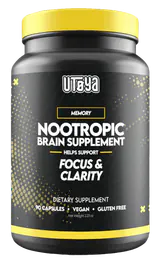
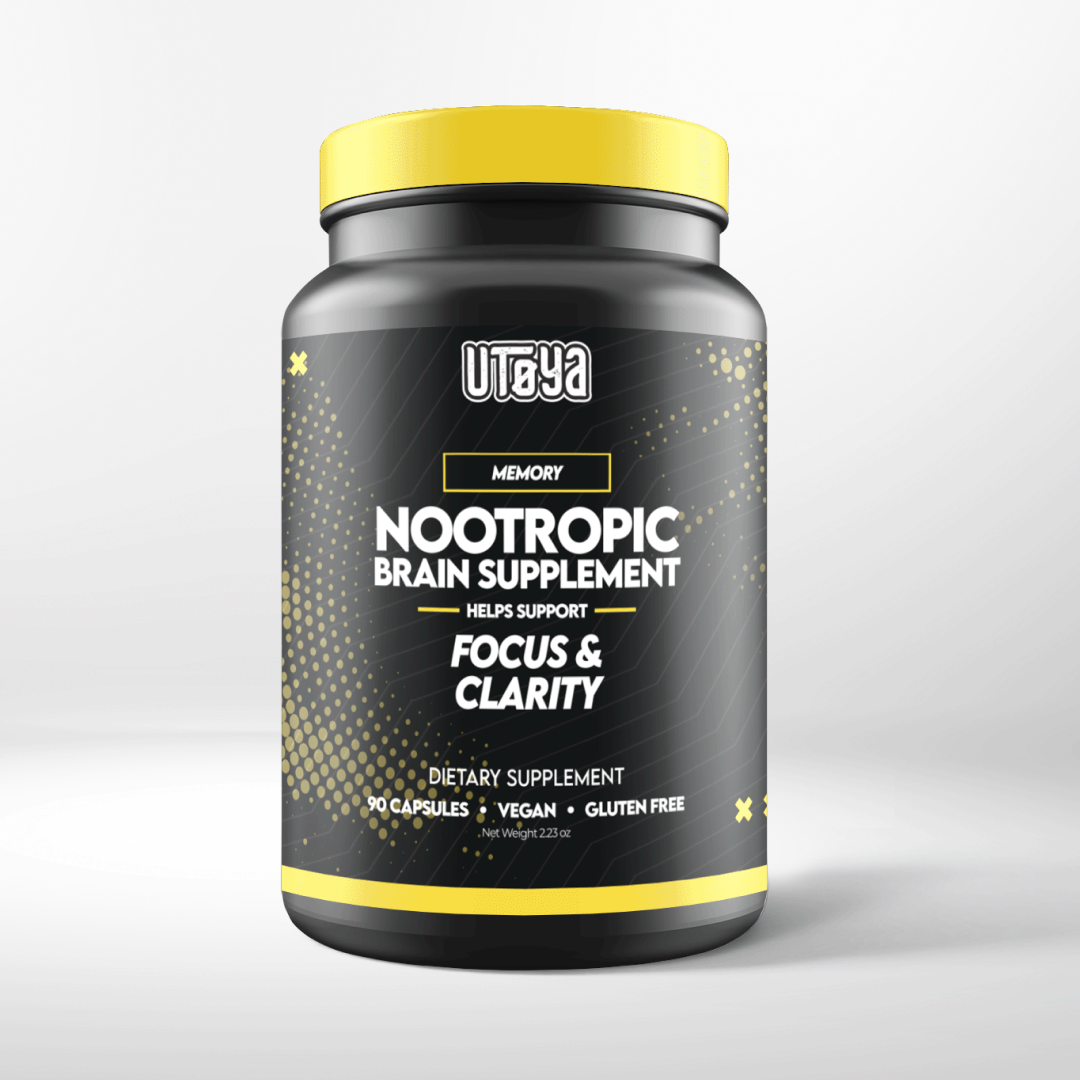
Utoya Wellness Nootropic is a caffeine free daily capsule for people who want focus and a relaxed, alert mind without stimulants. The serving is two capsules with breakfast.
| Label fact | Detail |
|---|---|
| Serving | Two capsules with breakfast |
| Key ingredients | L-tyrosine, L-theanine, phosphatidylserine, cat's claw bark extract, vitamin B6 |
| Stimulants | No caffeine or other stimulants |
It helps support focus and attention on demanding days. Choose something else if you want omega-3, a vitamin D or B12 fix for low intake, or a caffeine boost. Skip it, or ask a doctor first, if you take blood thinners, antidepressants or blood pressure drugs, or if you are pregnant or nursing. See the Nootropic Brain Supplement page or the complete guide.

Shop Nootropic Brain Supplement
Frequently asked questions
What vitamins help with concentration and memory?
B6, B12 and folate support normal brain function, and they matter most if your intake is low. Vitamin D and omega-3 are often discussed too, and a doctor can tell you whether a blood test makes sense.
Is Prevagen or Neuriva better?
No head to head human trial exists, so neither can be called better. Compare their current labels for ingredients, amounts and third party testing, then pick the one that fits you.
How long does it take for a brain supplement to work?
Caffeine and theanine act within hours, while most other ingredients take weeks to months of daily use. Give one product a steady trial before changing anything.
Can I take a brain supplement with prescription medicine?
Ask your doctor or pharmacist first, because some ingredients interact with medicine. This matters most for blood thinners, antidepressants and blood pressure drugs.
Is a caffeine free brain supplement worth trying?
Yes, if you are sensitive to caffeine, protect your sleep, or want steady focus without a stimulant. It will feel gentler than coffee, so expect calm alertness rather than a lift.
These statements have not been evaluated by the Food and Drug Administration. This product is not intended to diagnose, treat, cure, or prevent any disease.
Sources
- GEM Study 2004, PubMed/NIH
- Bacopa Meta-analysis 2013, ScienceDirect/Journal of Ethnopharmacology
- GEM Study (JAMA) 2009, JAMA: The Journal of the American Medical Association
- Bacopa Meta-analysis (HerbalGram) 2016, HerbalGram (American Herbal Pharmacopoeia)
About the author: John Crawford, Head of Products at Utoya Wellness. John has worked in supplements for 8 years and leads product sourcing at Utoya Wellness.
Caffeine-free daily formula with L-tyrosine, L-theanine & phosphatidylserine.
- One-time
- $39.99
- Subscribe & save 20%
- $31.99 / month
*These statements have not been evaluated by the Food and Drug Administration. This product is not intended to diagnose, treat, cure, or prevent any disease.


