


Nootropic Side Effects: What to Expect, Who Should Skip Them, and How to Lower Your Risk
By the Utoya Wellness team · · 8 min read
Quick answer
Nootropic is a label covering very different products, so side effects depend on the type. The most commonly reported are headache, nausea, a jittery feeling, sleep trouble and stomach upset. Prescription stimulants and wakefulness drugs carry bigger risks than most over-the-counter supplements. If you take any medication, ask a doctor or pharmacist first. Utoya Wellness Nootropic is caffeine-free, with no stimulants in the formula.
The short answer: what side effects are common and which kinds carry more risk
The side effects people mention most are headache, nausea, jitteriness, poor sleep and an upset stomach, and the risk is higher with prescription drugs and stimulants than with most supplements.
"Nootropic" is not one thing. It can mean a cup of coffee, a plant extract, an amino acid or a prescription drug used off label. If you take medication, talk with your doctor or pharmacist before adding anything new.
This guide is general information, not medical advice. We do not quote percentages, because rates vary widely by product, dose and person, and no single source covers them all.
Why side effects depend on what kind of nootropic you mean
Risk changes mostly by category, so the first question is what you are actually taking.
Here is a simple risk ladder, from generally higher concern to generally lower. It is a way to think, not a measurement.
- Prescription stimulants and wakefulness drugs (modafinil-type). These are regulated medicines. They are more likely to affect heart rate, blood pressure and sleep, and some carry dependence potential. They need a prescriber.
- Racetams (such as piracetam). These are often sold online in a regulatory gray area. Purity and dose can be uncertain, so you may not know what you are getting.
- Caffeine and other stimulants. Widely used and easy to stack by accident. Jitters, a crash, faster heartbeat and poor sleep are the classic complaints. Tolerance builds.
- Non-stimulant supplements (amino acids, phospholipids, herbs, vitamins). Usually milder, with stomach upset and headache the typical complaints. Quality and labeling still vary by brand.
Four things shift as you move down the ladder: dependence potential, effects on heart rate and blood pressure, effects on sleep, and the chance that the product is not what the label says.
Side effects by ingredient: a comparison table
Each ingredient has its own usual complaints, and none of them is risk free for everyone.
The table is general, plain-language guidance, not a substitute for a label or a clinician. Regulated drugs (modafinil) and supplements are different categories with different oversight. Onset and severity vary so much by dose, product and person that we do not give one timeline per ingredient.
| Ingredient | Commonly reported effects | Who should be careful |
|---|---|---|
| Caffeine | Jitters, faster heartbeat, sleep trouble, a later crash | People sensitive to stimulants, those with blood pressure or heart rhythm questions, pregnant people |
| L-theanine | Generally mild; occasional headache or drowsiness is reported | People on blood pressure medication should ask a pharmacist |
| L-tyrosine | Occasional nausea, headache or restlessness | People taking thyroid medication should ask a pharmacist |
| Phosphatidylserine | Occasional stomach upset or trouble sleeping | People on blood thinners should ask a pharmacist |
| Cat's claw bark extract | Stomach upset or headache are commonly mentioned for herbal extracts like it | People on blood thinners, or anyone on prescription medication, should ask a pharmacist first |
| Vitamin B6 | Usually well tolerated at label amounts; check total B6 across all your supplements | Anyone taking several multi-ingredient products |
| Bacopa | Stomach upset, nausea or loose stools are commonly mentioned | People with sensitive stomachs; take with food |
| Ashwagandha | Stomach upset, drowsiness | Pregnant people and those on thyroid medication should ask first |
| Lion's mane | Usually mild stomach upset; rash is possible | People with mushroom allergies |
| Piracetam | Headache, restlessness, sleep changes | Anyone on medication; purity of gray-market products can vary |
| Modafinil (prescription) | Headache, nausea, nervousness, sleep trouble | Prescription only; use under a prescriber's direction |
Use the table to know what to watch for, then check your own label and ask a pharmacist about your own medications.
How nootropics tend to feel, and when effects show up
Stimulant-type products usually announce themselves within hours, while non-stimulant ones tend to feel quieter and more gradual.
With a stimulant, the pattern is familiar: an edge, maybe jitters, then a dip as it wears off. Sleep is the first thing to suffer if you take it late.
Non-stimulant formulas are different. You might notice nothing dramatic. Some people describe a steadier, calmer kind of focus over days rather than a jolt. Human research on many of these ingredients is limited, so any single timeline is a rough guide at best.
After stopping, a stimulant can leave you tired or headachy for a few days. With non-stimulant supplements, many people notice little change. There is no firm number for either.
Is it bad to take nootropics every day?
Daily use is not automatically harmful, but for most supplements there are no long-term human trials, so nobody can promise it is fine for years.
Tolerance is a known issue with stimulants like caffeine, where the same dose does less over time. For other ingredients, little is known about multi-year use. Cycling schedules (for example, five days on, two off) are popular online, but they are not well studied.
- Start with the serving on the label, not more.
- Change one thing at a time so you know what caused what.
- Keep a short note on sleep, mood and stomach comfort.
- Check in with a doctor if you plan to use something long term.
- If stomach upset is a problem, try taking it with food.
Who should not take nootropics, or should ask a doctor first
Several groups should talk to a doctor before starting any nootropic, and some should skip them.
- Teens and children: Under 18, skip them unless a doctor says otherwise.
- Older adults: Ask first, especially if you take several medications.
- Pregnant or nursing people: Ask your doctor before using any supplement.
- People on prescription medication: Get a doctor's or pharmacist's okay.
- People sensitive to stimulants: Avoid caffeine-heavy products and watch for stacking.
- People with blood pressure or heart rhythm questions: Ask a doctor before using any stimulant product.
Interactions to ask a pharmacist about
A pharmacist can check your exact medications against a product's label in minutes, so bring the bottle.
- Does this mix with my antidepressant?
- Is it okay alongside a blood thinner?
- Could it affect my thyroid medication?
- Does it matter that I use hormonal birth control?
- What about alcohol?
- I already take another stimulant. Is adding this a problem?
- Does anything in this formula, including herbal extracts like cat's claw bark, matter for my medications?
How to lower your risk: label and stacking checklist
Most avoidable problems come from unclear labels and too many new products at once, so check the label before the first dose.
- Read the amount per serving. You should see each ingredient and its amount.
- Avoid proprietary blends that hide doses. If you cannot see how much of each ingredient is in there, you cannot judge it.
- Look for third-party testing and batch results you can actually view.
- Count your caffeine. Coffee, energy drinks, pre-workout and a caffeinated nootropic add up fast.
- Add one new product at a time.
- Walk away from red flags: over-the-top promises, undisclosed ingredients, or prescription drugs sold as supplements.
What a caffeine-free formula changes, and what it does not
A caffeine-free formula removes stimulant-type jitters and the afternoon crash, but it does not make a supplement suitable for everyone.
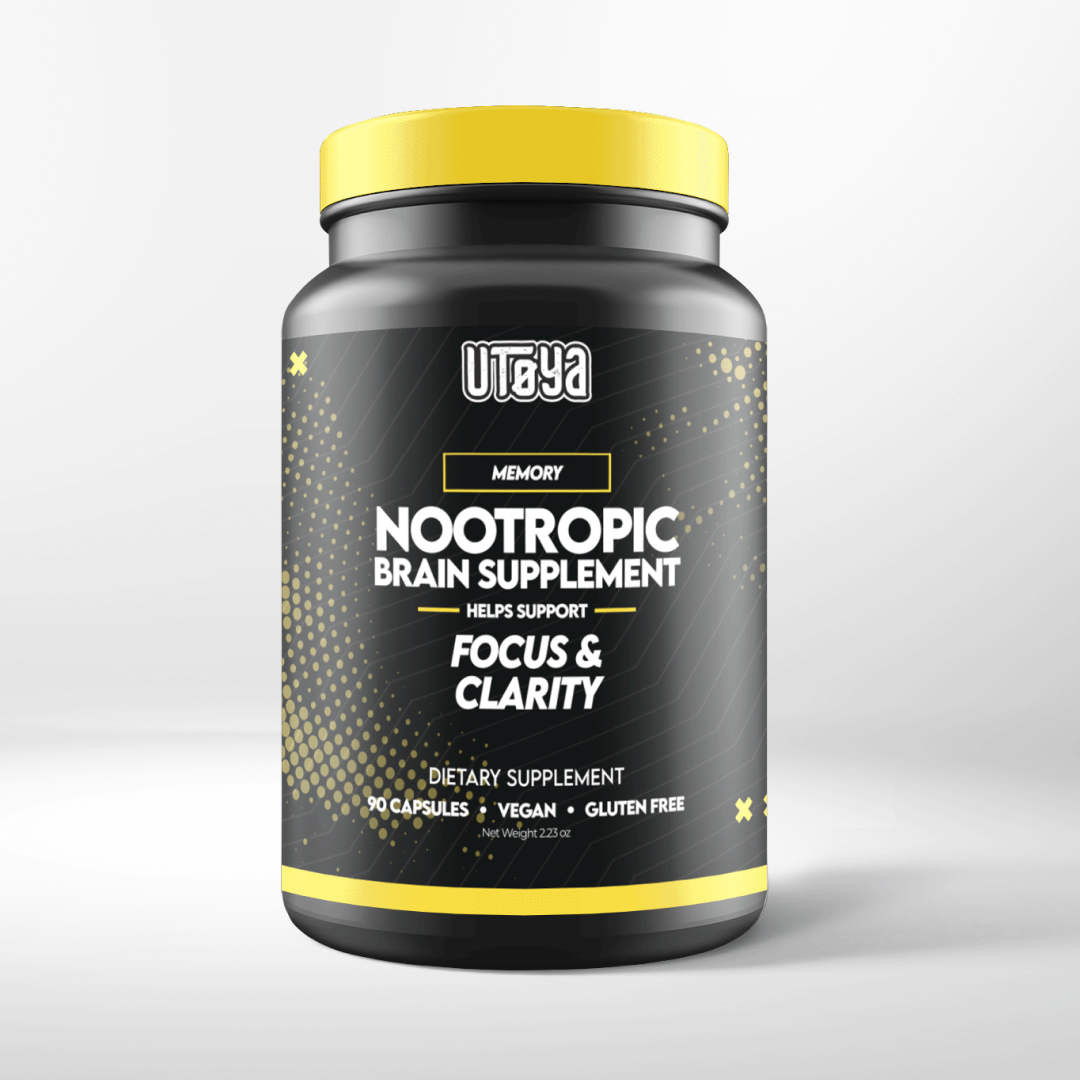
Utoya Wellness Nootropic is a caffeine-free daily capsule for focus and mental clarity. Two capsules with breakfast deliver L-tyrosine, L-theanine and phosphatidylserine, plus cat's claw bark extract and vitamin B6, with no caffeine or other stimulants in the formula. It is designed to help support focus and attention on demanding days and a relaxed, alert mind without caffeine.*
Any supplement can still cause stomach upset or simply not suit you. Taking it with breakfast, as directed, is a sensible way to start.
It is not for people who are pregnant or nursing, people on medication who have not checked with a doctor, or anyone under 18.
See the Nootropic Brain Supplement page for details, or read our complete nootropic guide.

When to stop and when to see a doctor
Stop the product and get medical advice if something feels wrong, and do not wait it out.
- A racing or irregular heartbeat
- A severe headache
- Rash or swelling
- Ongoing sleep loss
- Mood changes that feel unusual for you
If symptoms are severe or sudden, seek urgent care. Tell your clinician exactly what you took and how much.
Frequently asked questions
Is it bad to take nootropics every day?
Not necessarily, but long-term human data is limited for most supplements, so start with the label serving, track how you feel and check in with a doctor for ongoing use.
How do nootropics make you feel?
Stimulant-type products often bring an edge or jitters followed by a dip, while non-stimulant formulas tend to feel subtler and more gradual.
Who should not take nootropics?
People under 18, pregnant or nursing people, and anyone on prescription medication should ask a doctor first, and many should skip them.
Can nootropics cause headaches or trouble sleeping?
Yes, headache and sleep trouble are among the most commonly reported effects, especially with stimulants or late-day doses.
Does a caffeine-free nootropic still have side effects?
Yes, it avoids stimulant jitters and crashes, but stomach upset or a poor fit for your body is still possible.
These statements have not been evaluated by the Food and Drug Administration. This product is not intended to diagnose, treat, cure, or prevent any disease.
About the author: John Crawford, Head of Products at Utoya Wellness. John has worked in supplements for 8 years and leads product sourcing at Utoya Wellness.
Read more: phosphatidylserine supplement.
Read more: best brain supplements for memory and focus.
Read more: best l-theanine supplement.
Read more: pre workout nootropic.
Caffeine-free daily formula with L-tyrosine, L-theanine & phosphatidylserine.
- One-time
- $39.99
- Subscribe & save 20%
- $31.99 / month
*These statements have not been evaluated by the Food and Drug Administration. This product is not intended to diagnose, treat, cure, or prevent any disease.


