
Nootropic Mushrooms: What the Research Shows and How to Choose
By the Utoya Wellness team · · 8 min read
Quick answer
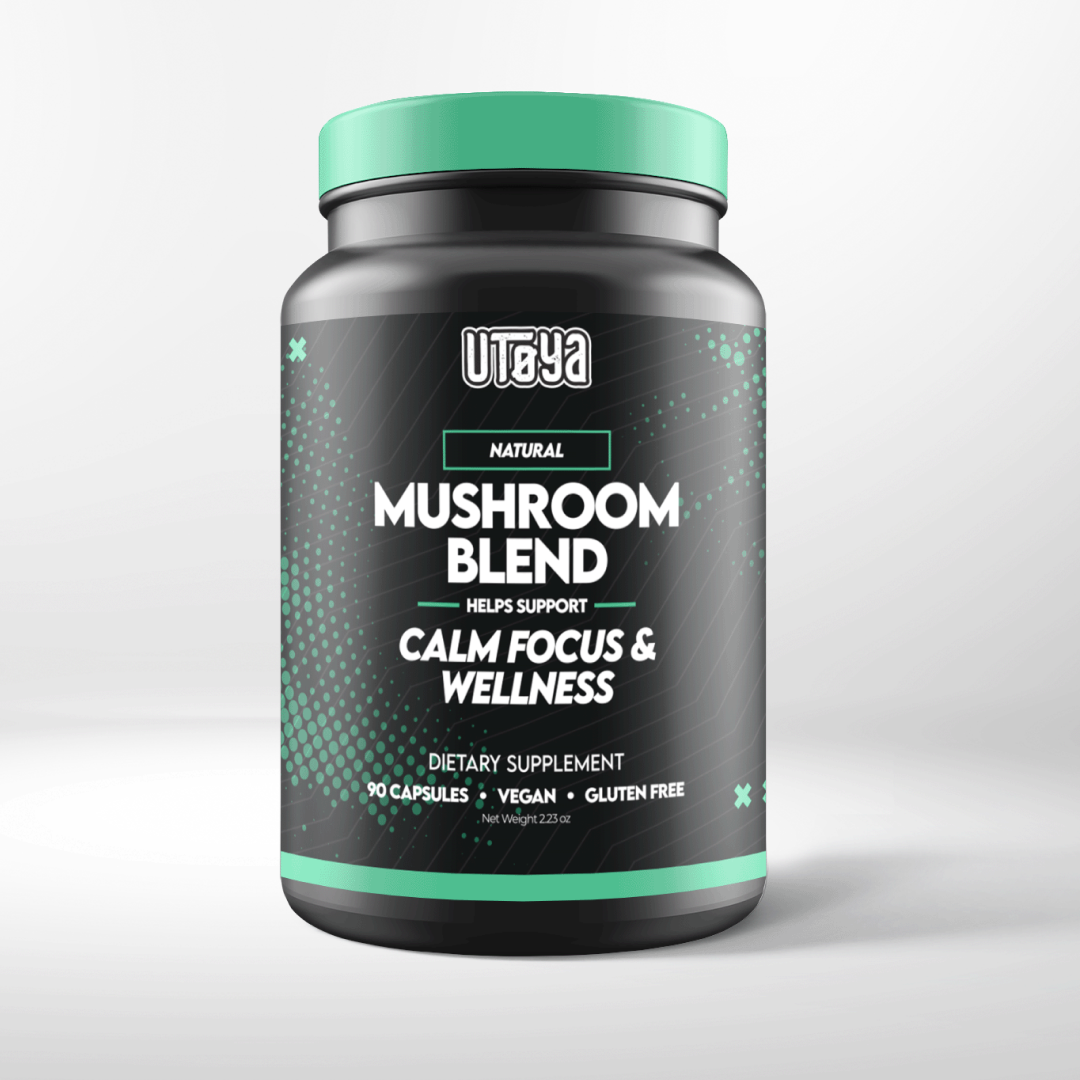
Nootropic mushrooms are functional mushrooms, such as lion's mane, reishi and cordyceps, that people take to support focus, memory, calm and mental energy. Lion's mane has the most human research, but those trials are few and differ in design. Look for fruiting body extracts and labels that state the amount per serving. They are not psychedelic mushrooms and do not cause a high. One broad option is Mushroom Blend.
Nootropic mushrooms, in plain words
A nootropic mushroom is a functional mushroom people take to support mental performance, such as focus, memory, calm and steady mental energy.
These are the same culinary and traditional mushrooms you may know from food and herbal use, usually dried, extracted and put in capsules or powders. They are not psychedelic mushrooms. They do not cause a high or change your perception.
The research is real but young. Lion's mane has a handful of human trials. For the other mushrooms below, most of what you will read rests on traditional use, animal work or cell work, and we say so in each section.
Evidence at a glance: what each mushroom is used for and how strong the research is
Lion's mane has the most human research of the five, and even that is early, while the rest are mostly used on tradition and lab work.
| Mushroom | What people use it for | Type of research | Evidence strength for mental effects |
|---|---|---|---|
| Lion's mane | Focus and memory | Human trials [1][2][3][4], plus lab work behind the nerve growth factor idea | Early. A few trials that differ in extract, dose and length. |
| Reishi | Calm and a healthy response to stress | Traditional use, with research mostly in animals and cells | Limited. No established human dose range for mental effects. |
| Cordyceps | Energy and stamina | Traditional use, with research mostly in animals and cells | Limited. No established human dose range for mental effects. |
| Turkey tail | Immune and gut support | Traditional use | Not a focus mushroom |
| Chaga | Immune support | Traditional use | Not a focus mushroom |
Claims about mushrooms outside lion's mane should be read as traditional use, not proof of a mental effect in people.
Lion's mane: the most studied for focus and memory
Lion's mane is the best studied nootropic mushroom, but the human evidence is still early.
It is often linked to nerve growth factor support, a lab-based idea about how its compounds may work. In people, a few trials exist:
- A randomized, double-blind, placebo-controlled trial in adults aged 40 to 75 with self-reported cognitive difficulty, which began with a one-week baseline [2].
- An acute randomized, placebo-controlled, double-blinded, cross-over study of a single dose [3].
- A trial of an erinacine A extract with a 3-week no-drug screening period, then a 49-week double-blind period with two parallel groups [1].
- A study of Yamabushitake (lion's mane) in which 30 subjects were randomized into two groups of 15 [4].
These studies differ in extract, dose and length, so they cannot be stacked into one simple verdict. Read each one on its own terms, using the reference list below. Our read: promising, not settled. For more, see our Lion's Mane Mushroom guide.
Reishi: calm rather than stimulation
Reishi is used for calm and a healthy response to stress, not as a mental stimulant.
If you want a lift in alertness, reishi is not that. People tend to reach for it in the evening or when they want to feel more settled. Its place in a focus routine is the calm side of calm focus. Research on reishi for mental effects leans on animal and cell work, so there is no proven human dose range to quote. Follow the amount on the label.
Cordyceps, turkey tail and chaga: where they fit
Cordyceps is used for energy and stamina, while turkey tail and chaga are used mainly for immune and gut support.
None of these three is a core focus mushroom, and there is no established human dose range for a mental effect from any of them. They show up in blends because people want a wider routine than one ingredient.

How to read a mushroom supplement label
The most useful label checks are the part of the mushroom used, how it was extracted, and whether a third party tests the product.
- Fruiting body versus mycelium on grain. The fruiting body is the mushroom itself. Mycelium grown on grain can leave a lot of grain starch in the powder. Labels that say fruiting body are easier to trust.
- Beta glucans. Many brands cite these as a quality marker. A label that states beta glucan content tells you more than one that does not.
- Extract ratios. A 10:1 extract means about 10 parts of dried mushroom were used to make 1 part of extract. That describes how concentrated the starting material was. It is not an amount of any active compound, and two 10:1 products can differ a lot.
- Third party testing. Look for batch-level testing for identity and contaminants such as heavy metals, with results you can read.
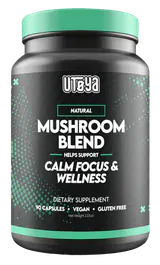
Worked example: Mushroom Blend lists 10:1 extracts of lion's mane, turkey tail, reishi and chaga, plus a 19-mushroom fruiting-body blend, for 1,160 mg of mushrooms per serving. The ratio tells you the extracts are concentrated. The 1,160 mg is the total, not the amount of any single compound.
Capsules, powders, gummies, tinctures and coffee blends compared
Capsules make it easiest to know what you are getting, while powders and coffee blends win on flexibility and taste.
| Format | Amount per serving | Convenience | Taste | Label clarity |
|---|---|---|---|---|
| Capsules | Fixed and easy to read | High | None | Usually clear |
| Powders | Depends on your scoop | Medium | Earthy | Clear if amounts are listed |
| Gummies | Often small, as sweeteners take up space | High | Sweet | Check the mushroom amount, not just the blend total |
| Tinctures | Drops vary | Medium | Strong | Harder to compare |
| Coffee blends | Often small per cup | High if you drink coffee | Coffee-led | Check the mushroom amount per cup |
Pick the format you will actually take every day, then check the mushroom amount per serving on the label.
What is in Mushroom Blend
Mushroom Blend packs 23 functional mushrooms into two capsules, for 1,160 mg of mushrooms per serving.
It combines 10:1 extracts of lion's mane, turkey tail, reishi and chaga with a 19-mushroom fruiting-body blend and a touch of black pepper extract. People take it to help support calm focus, a healthy immune system, gut health, and calm and a healthy response to stress.
It suits you if you want one broad blend for calm focus plus immune and gut support. You may prefer a single mushroom if your main goal is focus and memory and you want lion's mane alone. In that case read our best lion's mane supplement article.
How people usually take them, and how long to give it
Take it daily, follow the label on food, and give it several weeks before judging.
Mushroom supplements are not like caffeine. Consistency matters more than timing. Here is a simple 30 day routine:
- Take the serving on the label at the same time each day.
- Each evening, jot a 1 to 5 score for focus and for sleep.
- Change nothing else big, such as caffeine or bedtime, in the first two weeks.
- At day 30, compare your first and last week of notes.
For dose questions on lion's mane, read how much lion's mane is too much.
Who should check with a doctor first
Talk to your doctor or pharmacist before taking mushroom supplements if you take certain medications, are pregnant or nursing, or are allergic to mushrooms.
- You take medication that affects blood clotting, your immune response or blood sugar.
- You are pregnant or nursing.
- You have a mushroom or mold allergy.
- You have surgery planned.
Bring the label with you so they can review every ingredient.
Frequently asked questions
Do nootropic mushrooms actually work?
Lion's mane has some early human trial evidence for focus and memory, but the research is limited and the trials differ in design [2][3].
For other mushrooms, the support is mostly traditional use. Treat them as a routine to try and track, not a sure thing.
What are the downsides of taking lion's mane?
The main downsides are an upset stomach for some people, possible allergic reactions, and uncertainty about the best dose.
Start with the labeled serving and stop if you feel off. Our dose article goes deeper.
What is the difference between nootropic mushrooms and psychedelic mushrooms?
Nootropic mushrooms are functional mushrooms that do not cause a high, while psychedelic mushrooms contain compounds that change perception.
Are mushroom gummies as good as capsules?
Not always, because gummies often hold less mushroom per serving and the label can make the amount harder to read.
If you love gummies, check the mushroom amount, not only the blend total. Capsules are the easiest to compare.
Who should talk to a doctor before taking mushroom supplements?
Anyone on medication that affects blood clotting, immune response or blood sugar, anyone pregnant or nursing, and anyone with a mushroom allergy should ask first.
How this page was made
This page was drafted with AI assistance from the four linked studies and Utoya Wellness label facts, then edited by the Utoya Wellness team. It is general information, not medical advice.
These statements have not been evaluated by the Food and Drug Administration. This product is not intended to diagnose, treat, cure, or prevent any disease.
Sources
- Erinacine A study 2020, PubMed
- Frontiers 2026, Frontiers in Nutrition
- Lion's Mane acute study, PubMed Central
- Yamabushitake study, PubMed
About the author: John Crawford, Head of Products at Utoya Wellness. John has worked in supplements for 8 years and leads product sourcing at Utoya Wellness.
Caffeine-free daily formula with L-tyrosine, L-theanine & phosphatidylserine.
- One-time
- $39.99
- Subscribe & save 20%
- $31.99 / month
*These statements have not been evaluated by the Food and Drug Administration. This product is not intended to diagnose, treat, cure, or prevent any disease.


