
Best Lion's Mane Supplement: What to Check Before You Buy
By the Utoya Wellness team · · 9 min read
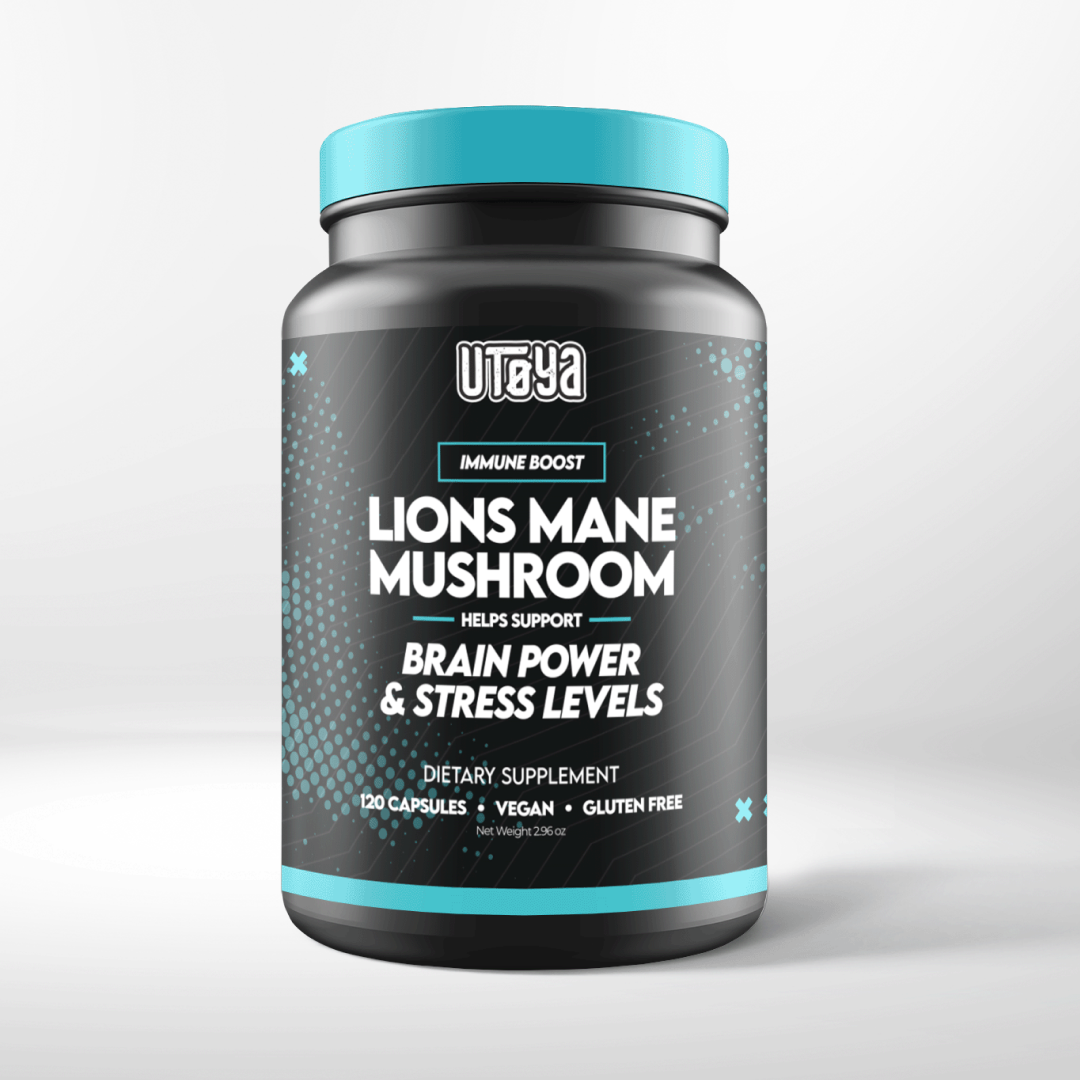
Quick answer
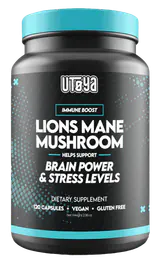
The best lion's mane supplement is the one whose label proves what is inside. Look for a named mushroom part, organic sourcing, third party lab results, a stated amount per serving, and no grain filler. Utoya Wellness Lion's Mane Mushroom is one option: 1,000 mg per 2-capsule serving, with fruiting body, mycelium and extracellular compounds. It suits people who want a simple daily capsule. If you want a fruiting-body-only extract, a powder, or a non-capsule form, pick another type.
The short answer: the best lion's mane supplement is the one whose label proves what is inside
Five label checks tell you more than any brand ranking: the mushroom part, the amount per serving, extraction and beta glucan information, third party testing, and the ingredient list.
Many products look alike on the shelf. The label is where they differ. If a product cannot tell you which part of the mushroom it uses, how much is in a serving, and whether the batch was tested, keep looking. Utoya Wellness Lion's Mane Mushroom is organic and delivers 1,000 mg in every 2-capsule serving, made from the fruiting body, mycelium and extracellular compounds. It is a good fit for a simple daily routine. It is not the best fit if you specifically want a fruiting-body-only extract or a form you can stir into a drink.

Side by side: the five label checks and how each product type scores
No single product type wins every check, so the table shows where each one is strong and where it is weak.
| Check | Fruiting body extract capsule | Whole-complex capsule (ours) | Raw fruiting body powder | Mycelium on grain product | Gummy or tincture |
|---|---|---|---|---|---|
| Mushroom part | Strong. Fruiting body only, which many guides prefer. | Broad. Fruiting body, mycelium and extracellular compounds in one product. | Strong. Fruiting body, if the label says so. | Weak. Mycelium grown on grain, and the grain stays in the product. | Varies. Check which part is named. |
| Amount per serving | Usually clear in mg. | Clear: 1,000 mg per 2-capsule serving. | Clear by the scoop or teaspoon, but the serving is measured by you. | Often clear, but part of the weight may be grain. | Often lower per serving. Read the label. |
| Extraction and beta glucan info | Strong when a beta glucan percentage is listed. | Loses here if the label does not state a beta glucan percentage. Ask for batch results. | Raw powder is not extracted, so it has less concentrated actives per gram. | Often lists total polysaccharides, which can include starch. | Rarely listed. |
| Third party testing and batch certificate | Look for a batch certificate of analysis. | Look for a batch certificate of analysis. | Look for a batch certificate of analysis. | Look for a batch certificate of analysis and a starch result. | Look for a batch certificate of analysis. |
| Organic sourcing and ingredient list | Varies. Check for fillers. | Organic, and a simple capsule. | Varies. Check for organic and no additives. | Check for grain type and allergens. | Gummies often add sweeteners and flavors. |
| Format and who it suits | People who want a concentrated, label-forward product. | People who want one simple daily capsule. | People who mix drinks or cook with it. | Price shoppers who accept the grain trade-off. | People who dislike or cannot swallow capsules. |

How to read a lion's mane label in two minutes
Read four things in order: the part used, the amount per serving, any extraction or beta glucan statement, and the other ingredients.
Start with the Supplement Facts panel. Then scan the other ingredients for rice, oat or other grain. Last, look for a link to a batch lab report. If any of these is missing, the product is asking you to take its quality on trust.
Fruiting body, mycelium and extracellular compounds: what each term means
The fruiting body is the visible mushroom, mycelium is the root-like network that grows it, and extracellular compounds are substances the mycelium releases while growing.
Many guides favor fruiting body because that is the part people traditionally eat. A whole-complex product combines the parts so you get more of what the organism makes. No human study has compared the two approaches head to head, so neither can be called better on evidence alone. What you can check is whether the label names the parts, states the amount, and shows lab results.
Spotting grain filler and vague terms
Phrases like "mycelium on grain" or "myceliated brown rice" mean the grain the mycelium grew on is usually ground into the final product.
That grain is mostly starch, which can dilute the mushroom content. A total polysaccharide number can look impressive while including that starch. Beta glucan is a better quality marker because it is more specific to mushroom cell walls. An extract ratio such as 8:1 describes how much raw material went into the extract, not how much beta glucan you get. Treat these as warning signs: no part named, a "proprietary blend" with no amounts, a polysaccharide claim with no beta glucan figure, and no lab report. A good lab report should show beta glucan, starch, heavy metals and microbial results for the specific batch.
What the human research actually shows
The human research on lion's mane is small, short and mixed, and much of the marketing runs ahead of it.
Published human trials tend to use small groups, a limited number of weeks, and different doses and preparations, which makes them hard to compare. That is why this page does not promise results from any one product. When you read a study, check four things: the number of participants, the dose and form used, how long it ran, and whether it was placebo controlled. Then check whether your product matches that form and dose. Our complete lion's mane guide goes deeper on the research.
Cost per effective dose, not price per bottle
Divide the price by the number of servings, then by the milligrams in each serving, to compare any two products fairly.
The method has three steps. First, price divided by servings per container gives cost per serving. Second, cost per serving divided by milligrams per serving gives cost per milligram. Third, if the label lists beta glucan, divide cost per serving by the beta glucan milligrams. Using our label as the example: a serving is 2 capsules and gives 1,000 mg, so a bottle's price divided by its number of servings is your cost per 1,000 mg. Plug in any other product the same way, and make sure you are comparing the same kind of material. A grain-heavy product at 1,000 mg is not the same as 1,000 mg of mushroom.
Our pick and the other types worth considering
Our pick for a simple daily routine is Utoya Wellness Lion's Mane Mushroom, and three other types fit other buyers better.
Utoya Wellness Lion's Mane Mushroom
It is the strongest choice for people who want one organic capsule routine. It gives 1,000 mg per 2-capsule serving from fruiting body, mycelium and extracellular compounds. Its limit is that it is a whole-complex product rather than a fruiting-body-only extract, so it suits you less if you want a label built around a beta glucan percentage.
Dual-extract fruiting body capsule
This type is best if you want the label to emphasize beta glucan content. Its limit is that it leaves out the mycelium and extracellular compounds, so it is a narrower product.
Raw fruiting body powder
Powder is best if you like mixing it into coffee, smoothies or food. Its limits are taste, the need to measure a serving yourself, and the fact that a raw powder is not concentrated.
Gummy or tincture
These are best if you dislike or cannot swallow capsules. Their limits are that gummies often include sugar and flavoring, and the amount of mushroom per serving can be harder to compare.
Everything else, including blends with other mushrooms and coffee mixes, is worth checking against the same five label checks.
Who should choose which: a segmented verdict
Choose by routine and label priorities: a capsule for simplicity, an extract for beta glucan focus, a powder for mixing, a gummy or tincture for easy swallowing.
- Choose our capsule if you want a simple daily routine and an organic whole-complex product.
- Choose a fruiting-body-only dual extract if you want the label to emphasize beta glucan content.
- Choose a powder if you prefer to mix it into coffee or food.
- Choose a gummy or tincture if you cannot swallow capsules.
If you are still deciding where to purchase, see where to buy lion's mane.
Who should check with a doctor first
Talk to a doctor or pharmacist before starting lion's mane if you are pregnant or nursing, take blood thinners or other medications, have a mushroom allergy, or have surgery scheduled.
Bring the bottle with you so they can see the full ingredient list and serving size. If you have ever reacted to mushrooms, skip it until you have had that conversation.
How and when to take it
Take lion's mane daily at the serving on the label, with or without food, and focus on consistency rather than perfect timing.
For our capsule, that means 2 capsules for 1,000 mg. If it bothers your stomach on an empty stomach, take it with a meal. Our article on the best time to take lion's mane covers timing in more detail.
Frequently asked questions
How much lion's mane should I take per day?
Follow the serving on your product's label. For Utoya Wellness Lion's Mane Mushroom, a serving is 2 capsules, which provides 1,000 mg. Different products use different forms and strengths, so do not mix servings from one label with another.
Is fruiting body better than mycelium?
No human study has compared them head to head, so neither is proven better. Many guides favor fruiting body, while whole-complex products combine parts. Choose based on what the label states and what lab results show.
How long does it take to notice anything?
It varies from person to person, and many people take it daily for several weeks before judging it. Consistent daily use is more useful than trying it for a few days.
Does an 8:1 extract ratio mean a stronger product?
No, a ratio describes how much raw mushroom went into the extract, not the amount of beta glucan or any other compound in it. Look for a beta glucan figure and a batch lab report instead.
Who should talk to a doctor before taking lion's mane?
Anyone who is pregnant or nursing, takes medication including blood thinners, has a mushroom allergy, or has surgery scheduled should check with a doctor or pharmacist first.
These statements have not been evaluated by the Food and Drug Administration. This product is not intended to diagnose, treat, cure, or prevent any disease.
About the author: John Crawford, Head of Products at Utoya Wellness. John has worked in supplements for 8 years and leads product sourcing at Utoya Wellness.
Read more: best mushroom supplements brands.
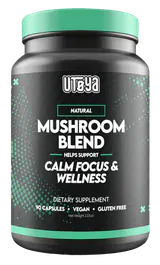
Read more: organic mushroom blend.
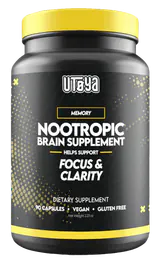
Read more: nootropic mushroom.
Caffeine-free daily formula with L-tyrosine, L-theanine & phosphatidylserine.
- One-time
- $39.99
- Subscribe & save 20%
- $31.99 / month
*These statements have not been evaluated by the Food and Drug Administration. This product is not intended to diagnose, treat, cure, or prevent any disease.


