
Chaga Capsules: What to Check on the Label Before You Buy
By the Utoya Wellness team · · 8 min read

Quick answer
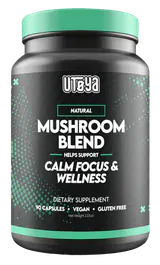
A good chaga capsule label names the plant part, the extraction method, the extract ratio, the extract amount per serving and a third party test you can see. A chaga-only capsule and a blend that contains chaga extract are different choices. Utoya Wellness sells Mushroom Blend, a two-capsule blend with 100 mg of 10:1 chaga extract per serving. Human research on chaga itself is limited, so judge the label, not the hype.
What to look for in chaga capsules: the short answer
Check six things: plant part, extraction method and ratio, extract amount per serving, third party testing, what else is in the capsule, and safety flags.
Chaga is not a standardized product. Two bottles with the same name can hold very different material. The rest of this page shows how to tell them apart. It also explains why a blend with chaga extract is a different choice from a chaga-only capsule. Most chaga research is in cells and animals, and human trials are few and small. [1]
What chaga is and what the capsules contain
Chaga (Inonotus obliquus) is a fungus that grows mostly on birch trees in cold northern climates, and it is sold as capsules, powder, tincture and tea.
The dark, craggy outer growth is a sclerotium, a hardened mass of fungal tissue. It is not a classic mushroom cap. Capsules may hold ground raw material, a concentrated extract, or something grown on grain.
Is chaga psychedelic? No. Chaga is a functional mushroom and has no psychedelic effect.
Six things to check on a chaga capsule label
Six label checks separate a clear product from a vague one, and none of them depends on marketing claims.
1. Plant part: fruiting body, sclerotium or mycelium on grain
The label should say which part of the organism is inside the capsule.
Look for plain wording such as "fruiting body" or "sclerotium." Chaga's dark outer mass is a sclerotium, so a label may use that term for it. Be careful with "mycelium" or "myceliated grain." Mycelium grown on grain can end up being mostly leftover grain, with little of the fungus itself. If a label says only "mushroom powder" or "mycelium" with no plant part, you cannot tell what you are getting.

2. Extraction method and extract ratio
Look for a named extraction method (hot water or dual extraction) and a stated ratio such as 10:1.
A 10:1 ratio means roughly 10 parts of raw material went into 1 part of finished extract. It describes how concentrated the starting material was. It is not the same as measured compound content. A ratio tells you nothing about how much of any specific compound is in the capsule. If a brand lists beta-glucan or polysaccharide percentages, check whether a lab test backs them up.
3. Amount per serving and servings per bottle
Compare the extract amount per serving, not the total capsule weight, because fillers and raw powder inflate the weight.
Use your own numbers and this worksheet:
- Cost per serving = bottle price divided by servings per container.
- Extract per serving (mg) = the extract amount listed for one serving, not the blend total.
- Cost per mg of extract = cost per serving divided by extract per serving (mg).
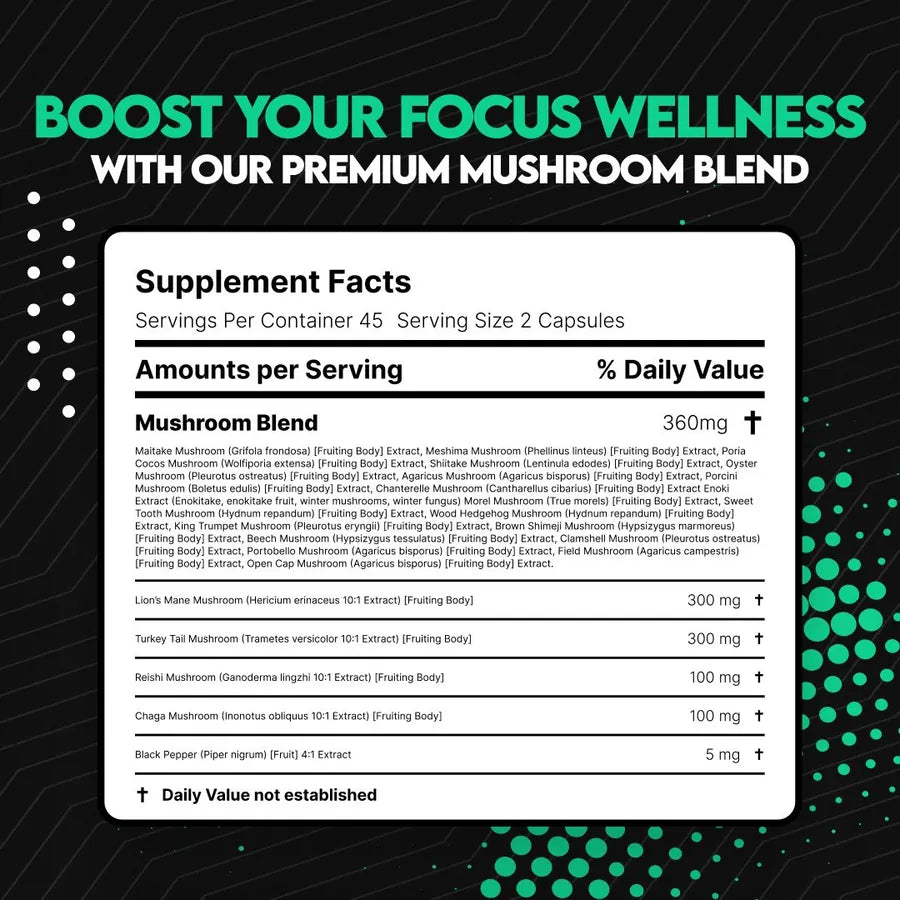
Check the serving size too. Some bottles list one capsule, others two or more. A low price per bottle can hide a small serving count or a small extract amount. For reference, Mushroom Blend lists a serving size of 2 capsules and 45 servings per container.
4. Third party testing and batch documents
A useful certificate of analysis (COA) comes from an outside lab, matches your batch number, and shows identity, heavy metals and microbes.
Ask whether the brand posts COAs by batch or only shows one generic page. Words like "non-GMO" and "vegan" describe sourcing or ingredients. They are not test results.
5. What else is in the capsule
Read the "other ingredients" line for fillers, flowing agents, capsule type and allergens.
Watch for a "proprietary blend" that gives only a total weight. That hides how much chaga is in it. Per-ingredient amounts let you compare products fairly.
6. Safety flags to read before buying
Chaga is known to be high in oxalates, so anyone with a history of kidney stones should ask a clinician before using it.
[2] A case report is a single story, not proof of how common this is. Reviews of oxalate-related kidney injury list case reports linked to high-oxalate foods. [3]
Talk to a doctor or pharmacist first if you take blood thinners or diabetes medicines, are pregnant or nursing, or have autoimmune concerns.
What research exists on chaga and what it does not show
Most chaga research is in cells and animals, and the human trials are few and small.
Think of evidence in tiers. Cell studies show what a compound does in a dish. Animal studies show what happens in a body that is not ours. Human trials show what happens in people, and for chaga they are scarce. A 2024 review of clinical evidence for medicinal mushrooms notes that, despite chaga's widespread use, trials on Inonotus obliquus are limited. [1] So the honest summary is that chaga may support the immune system in theory, but human proof is thin. Mushroom beta-glucans are studied more broadly than chaga itself, but that does not make chaga results certain.
Capsules vs powder vs tincture vs tea vs a blend
Capsules win on convenience and dose control, while tea and powder win on flexibility and tincture sits in between.
| Criterion | Chaga-only capsule | Powder | Tincture | Tea | Blend with chaga extract |
|---|---|---|---|---|---|
| Plant part and clarity | Clear if the label names it | Often raw ground material | Varies, often unlisted | Raw chunks or grounds | Check each ingredient |
| Extraction and ratio | Good if stated | Often none | Alcohol or dual, if stated | Hot water at home | Mushroom Blend lists 10:1 extracts |
| Amount control | Fixed, easy to count | You measure it | Drops, easy to adjust | Hard to know | Chaga is one part of the total |
| Third party testing | Check the COA | Check the COA | Check the COA | Rarely posted | Check the COA |
| Convenience and taste | No taste, easy to travel with | Earthy taste, mixes in drinks | Strong taste | Takes time to prepare | No taste, one routine |
| Safety fit | Same oxalate and medication flags | Same flags | Same flags | Same flags | Same flags, and several mushrooms |
A chaga-only capsule beats a blend if you want chaga alone or a chaga dose you control. A blend wins if you want one routine for several mushrooms. Powder and tea suit people who like to adjust and do not mind the earthy taste.
Where Mushroom Blend fits if you are shopping for chaga
Mushroom Blend suits people who want several mushrooms in a simple two-capsule routine, and it does not suit people who want a chaga-only product.
| Label fact | Mushroom Blend |
|---|---|
| Mushrooms | 23 functional mushrooms in two capsules |
| Serving size | 2 capsules |
| Servings per container | 45 servings |
| Chaga (Inonotus obliquus) 10:1 extract, fruiting body | 100 mg |
| Reishi (Ganoderma lingzhi) 10:1 extract, fruiting body | 100 mg |
| Lion's mane (Hericium erinaceus) 10:1 extract, fruiting body | 300 mg |
| Turkey tail (Trametes versicolor) 10:1 extract, fruiting body | 300 mg |
| 19-mushroom fruiting body blend | 360 mg |
| Black pepper (Piper nigrum) fruit 4:1 extract | 5 mg |
| Mushrooms per serving | 1,160 mg |
Chaga is one of four 10:1 extracts in the blend, so if you want a specific chaga amount, or only chaga, a single-ingredient capsule is the better fit. If you want one daily routine that covers several mushrooms, the blend is built for that. The full details are in Mushroom Blend: the complete guide.
Which mushroom or brand is best? How to decide
No single mushroom or brand is proven best, so choose by what you want and what the label shows.
- Choose a chaga-only capsule if you want chaga by itself, a dose you can count, and a label that names plant part, extraction and ratio.
- Choose a blend if you want one simple routine across several mushrooms and are fine with chaga being one part of it.
- Choose a different mushroom, such as turkey tail, if that is the one you were really curious about. See our turkey tail supplement guide.
Research on chaga in people is limited, so a brand that makes strong promises deserves more scrutiny, not less. [1] Pick the brand that is the most specific and the most open about batch testing.
Frequently asked questions
Does chaga support the immune system?
Chaga is often marketed for immune support, but human trials on it are limited. [1] Most findings come from cell and animal work, so treat it as an area of ongoing research rather than a settled result.
Is chaga psychedelic?
No, chaga is not psychedelic. It is a functional mushroom, not a psilocybin mushroom.
How do I pick the best chaga capsule brand?
Pick the brand that names the plant part, the extraction method, the extract ratio and the extract amount per serving, and that posts batch-level third party test results. Then compare cost per milligram of extract using the worksheet above.
Who should talk to a doctor before taking chaga?
Anyone with a history of kidney stones, anyone taking blood thinners or diabetes medicines, anyone pregnant or nursing, and anyone with autoimmune concerns should talk to a doctor or pharmacist first. [2]
Is a mushroom blend with chaga extract the same as a chaga capsule?
No, a blend is a different choice. In Mushroom Blend, chaga is 100 mg of 10:1 extract out of 1,160 mg of mushrooms per serving, alongside other extracts and a fruiting-body blend.
FDA disclaimer
These statements have not been evaluated by the Food and Drug Administration. This product is not intended to diagnose, treat, cure, or prevent any disease.
Sources
- PMC 2024, PMC/NIH
- Catholic University of Korea, Catholic University of Korea Research Portal
- PMC 2023, PMC/NIH
About the author: John Crawford, Head of Products at Utoya Wellness. John has worked in supplements for 8 years and leads product sourcing at Utoya Wellness.
Caffeine-free daily formula with L-tyrosine, L-theanine & phosphatidylserine.
- One-time
- $39.99
- Subscribe & save 20%
- $31.99 / month
*These statements have not been evaluated by the Food and Drug Administration. This product is not intended to diagnose, treat, cure, or prevent any disease.


