
NAD+ Supplement Side Effects: What to Expect and When to Stop
By the Utoya Wellness team · · 7 min read
Quick answer
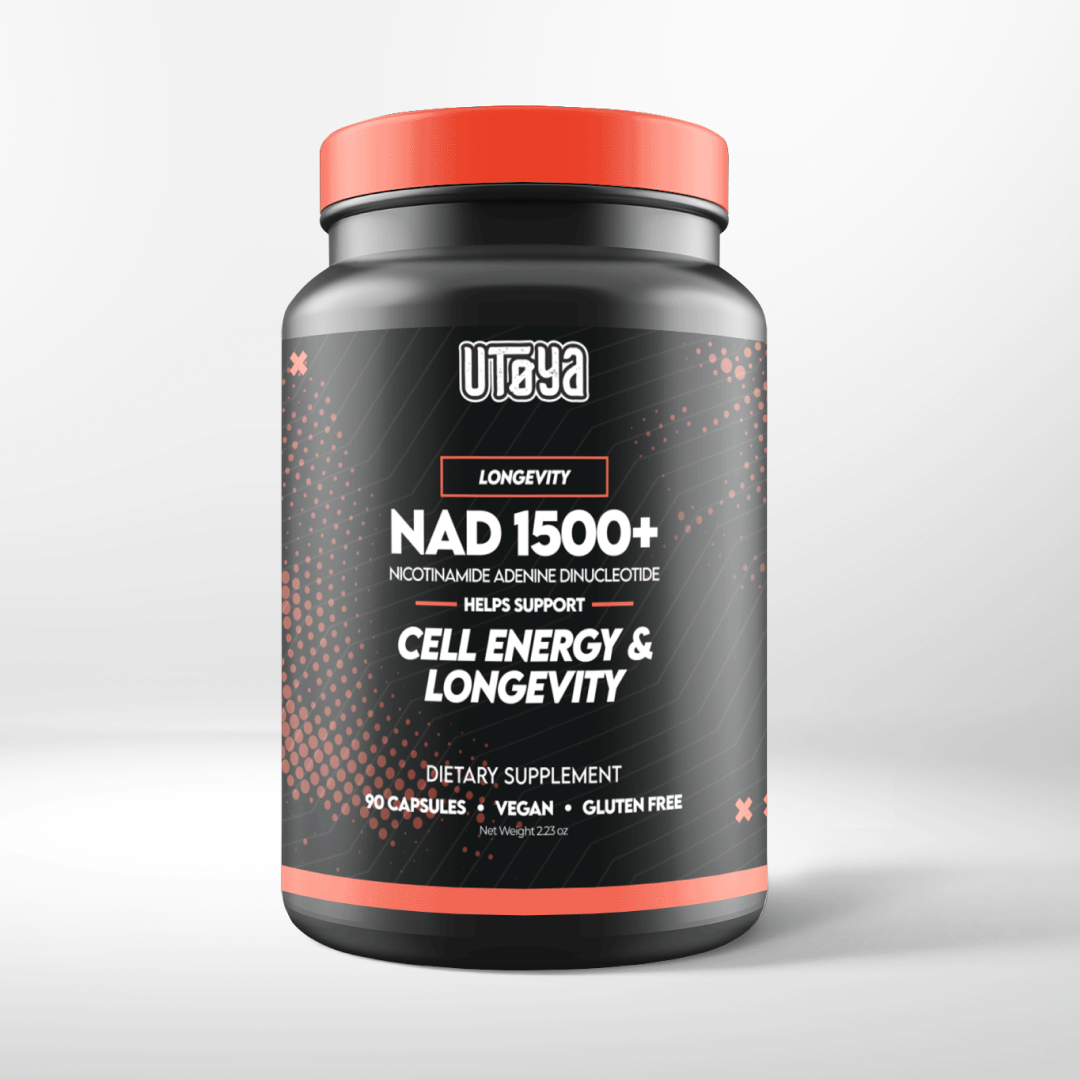
Oral NAD+ and its precursors, NMN and NR, are generally reported as well tolerated in short human studies, and the effects people mention are usually mild: nausea, digestive upset, headache, flushing and fatigue. Long term human data is limited, so no one can promise what years of use look like. Stop and get care for chest tightness, trouble breathing, swelling, a rash or fainting. The label details below refer to NAD 1500+.
The short answer: what side effects NAD+ supplements can cause
Most side effects people report from NAD+ supplements are mild and short lived, and the research on long term use is still thin.

The usual list is nausea, an unsettled stomach, loose stools, headache, a warm flushed feeling and tiredness. These tend to show up when someone starts, takes a large serving on an empty stomach, or stacks several products at once. Most studies on NAD+ precursors run weeks to months, not years. That means we can say what people notice early on. We cannot say what happens over a decade.
This page uses NAD 1500+ as the product its label details refer to. The general advice applies to any brand. For the wider background, see the complete NAD 1500+ guide and our piece on nad+ supplementation.
Side effects by form: oral, sublingual, NMN, NR, niacin and IV
The form you take changes what you are most likely to feel, mainly because each one reaches your body differently.
| Form | Effects people commonly mention | What to know |
|---|---|---|
| NAD+ capsules | Nausea, stomach upset, headache, fatigue | Swallowed and digested. Food and a smaller starting serving usually make it easier. |
| NMN | Digestive upset, headache, flushing | A precursor your body converts to NAD+. Usually studied over weeks to months. |
| NR | Nausea, digestive upset, headache | Another precursor. Also mostly studied in short trials. |
| Niacin | Flushing: warmth, redness, tingling | A vitamin B3 form that is well known for flushing. |
| Sublingual | Similar mild effects, sometimes taste or mouth irritation | Dissolved under the tongue. Product designs vary a lot. |
| Injection and IV | Chest tightness, cramping, lightheadedness | More likely when infused fast. Given by a clinician. This is a different experience from capsules. |
No single trial covers every row, and studies differ in dose, length and population, so treat the table as a map of what people tend to describe, not a set of rates. IV therapy is the form where speed matters most. Slowing the infusion is the usual way clinicians ease those sensations, and it is not comparable to taking capsules at home.
Flushing and niacin: why some forms feel different
Niacin flushes because it triggers blood vessels near the skin to widen, which causes warmth, redness and tingling.
NAD+ precursors such as NMN and NR are related to vitamin B3 but are not the same molecule. Some people still feel a mild warmth after taking them. If you feel flushed, it is usually brief. Taking your serving with food and starting smaller often helps. If you are unsure which form you are taking, check the supplement facts panel, since niacin and niacinamide are listed separately from NAD+, NMN and NR.
Common mild effects and what usually helps
Most mild effects ease with simple changes: eat first, start smaller, space your servings and drink water.
- Nausea or stomach upset: take it with a meal, not on an empty stomach.
- Diarrhea or loose stools: lower the serving and give your body a few days to adjust.
- Headache: drink water and avoid taking it late if it keeps you wired or uncomfortable.
- Fatigue: try a different time of day. Our guide to the best time to take nad+ covers timing.
If you are sensitive to supplements, start with a smaller portion of the serving on the label and build up over several days, as long as you stay within the directions on the label. Change one thing at a time so you know what helped.
What users describe: symptom, timing and fix
Customer reports are not research, but they show what people actually run into in daily life.

This section is built from what our customer team hears after people start NAD 1500+: which mild effects come up most, when they appear, how long they last and what changed them. These are anecdotes, not study results.
What is proven, what is theoretical, and what is unknown
What is observed is short term mild discomfort, what is theoretical is long term concerns raised online, and what is unknown is what years of use does.
- Observed: mild digestive upset, headache, flushing and fatigue in short human studies.
- Theoretical: online discussion about effects on cell growth, methylation load and blood sugar. These come from lab reasoning about how NAD+ works in the body, not from confirmed harms in people taking supplements.
- Unknown: most trials last weeks to months, and no human study has settled the long term questions.
Cautious is a fair stance. If any of these topics matter to your health, take them to your clinician rather than deciding from forum posts.
Medications and situations to talk to your doctor about first
Ask your doctor or pharmacist before starting if you take prescription medications, are pregnant or breastfeeding, are under a clinician's care, or have a procedure planned.
Bring these questions:
- Is there anything in my current medications that I should not combine with NAD+ or resveratrol?
- Should I pause this before a procedure, and for how long?
- Is there a serving or timing you would suggest for me?
- What symptoms should make me stop and call you?
- Should I have any routine checks while I take it?
Bring the bottle or a photo of the supplement facts panel so the pharmacist can check every ingredient.
When to stop and seek care
Stop taking it and get medical help right away if you have chest tightness, trouble breathing, swelling, a rash or fainting.
Also stop if symptoms are severe, keep going or are new for you. Mild upset that fades when you lower the serving or eat first is a different situation. If mild symptoms hang around for more than a few days at a low serving, stop and check in with a clinician.
Reading a label and judging quality
A good label tells you the exact amount per serving, the form of each ingredient and who tested it.
Check these four things on any brand:
- Amount per serving: and how many capsules make a serving.
- Ingredient form: NAD+, NMN, NR or niacin are not interchangeable.
- Third party testing: look for batch specific results you can actually read.
- Allergen statement: and the other ingredients list.
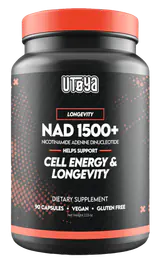
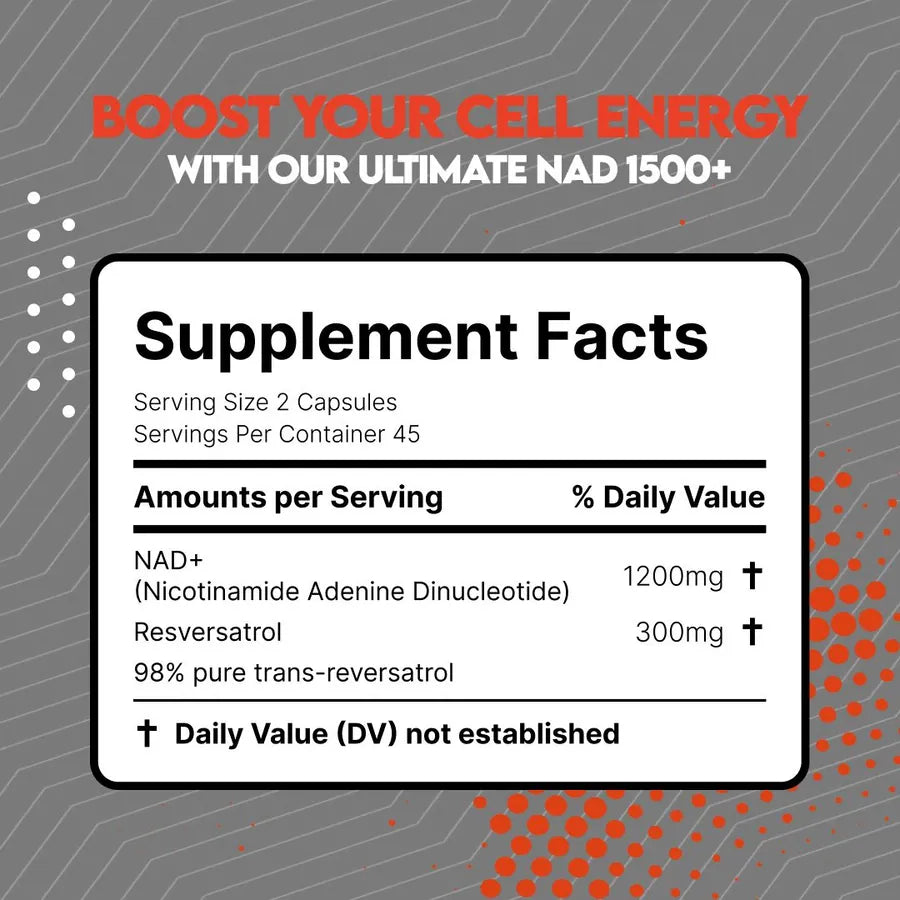
For NAD 1500+, the label lists 1,200 mg of NAD+ and 300 mg of trans-resveratrol in every 2-capsule serving. Those are the two ingredients to compare against any other product.
Who NAD 1500+ suits and who should skip it
NAD 1500+ suits adults who want support for cellular energy and healthy aging, can take capsules and have cleared it with a clinician if they need to.
It pairs NAD+ with resveratrol, an antioxidant polyphenol found in grape skins, which also supports cardiovascular health. Skip it if you are pregnant, nursing, under 18, take prescription medications without your doctor's approval, or are sensitive to resveratrol. See the NAD 1500+ product page and our article on nad+ and resveratrol.
Frequently asked questions
What is nicotinamide adenine dinucleotide (NAD+)?
NAD+ is a coenzyme your cells use to turn food into energy. It is found in every cell, and supplements aim to support the levels your body makes.
Is NAD+ the same as vitamin B12?
No, NAD+ is not vitamin B12. NAD+ is a coenzyme related to vitamin B3, while B12 is a separate vitamin with different roles. Niacin is also a different compound from NAD+.
How long do NAD+ supplement side effects last?
Mild effects usually fade within hours to a few days, especially once you eat first or lower the serving. If they persist, stop and ask a clinician. Exact durations vary by person and product.
Should I take NAD+ with food?
Taking NAD+ with food is a sensible default if you notice nausea or stomach upset. Start with a smaller portion and see how you feel. Our timing guide has more detail.
Who should talk to a doctor before taking NAD+?
Anyone taking prescription medications, pregnant or breastfeeding, under a clinician's care or planning a procedure should talk to a doctor or pharmacist first. Everyone else benefits from a quick check too if they are unsure.
Bottom line and next step
Start low, take it with food, and check with a clinician first if you are on any medication.
Keep a short note of how you feel in the first week. If something is severe or new, stop and get help.
About the author: John Crawford, Head of Products at Utoya Wellness. John has worked in supplements for 8 years and leads product sourcing at Utoya Wellness.
These statements have not been evaluated by the Food and Drug Administration. This product is not intended to diagnose, treat, cure, or prevent any disease.
Read more: resveratrol food supplement.
Caffeine-free daily formula with L-tyrosine, L-theanine & phosphatidylserine.
- One-time
- $39.99
- Subscribe & save 20%
- $31.99 / month
*These statements have not been evaluated by the Food and Drug Administration. This product is not intended to diagnose, treat, cure, or prevent any disease.


